
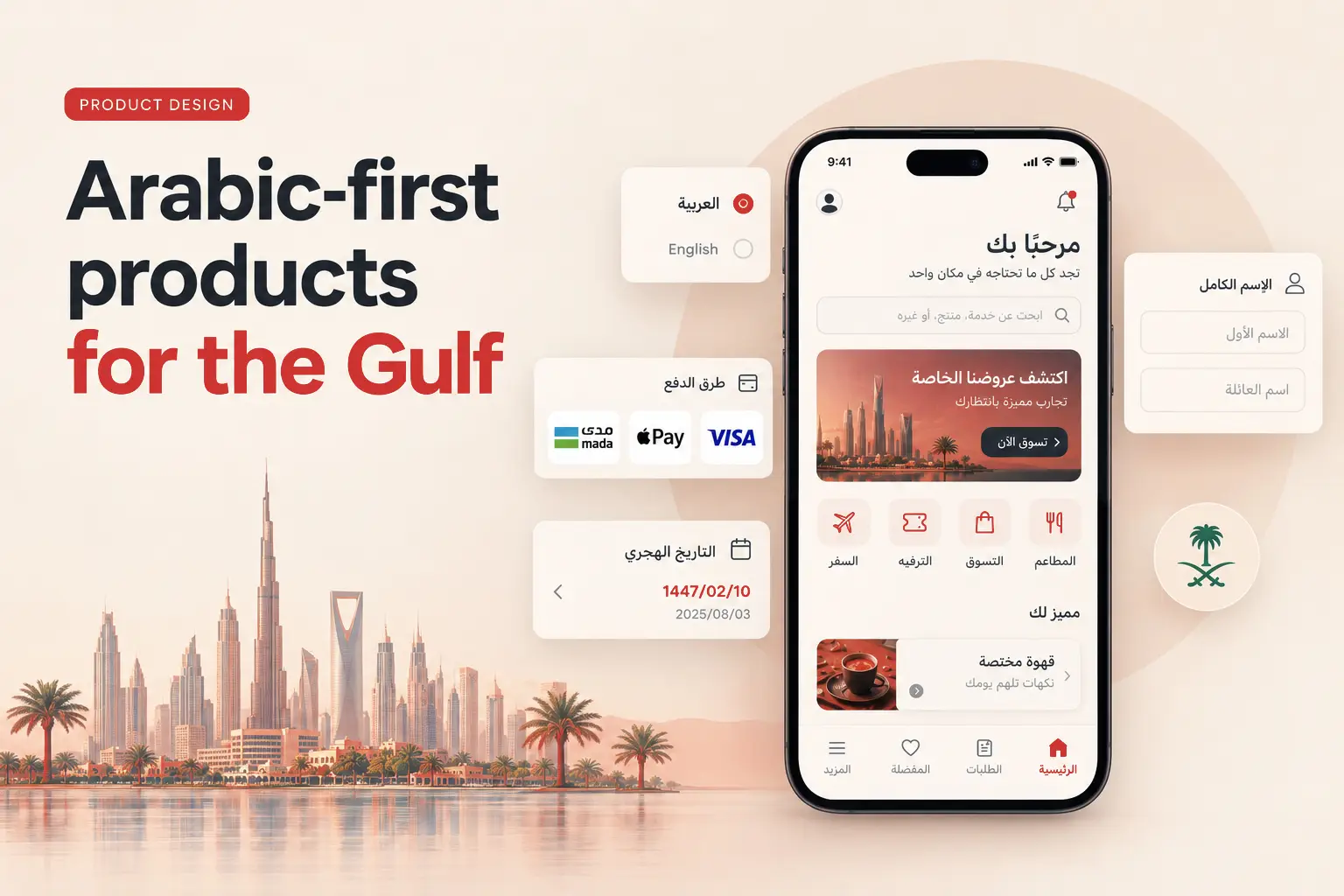
A pattern I see constantly: a product team lands funding, adds “GCC expansion” to the deck, ships an Arabic toggle, and waits for Saudi users to arrive.
They arrive. They open the app once. The retention chart tells the rest.
The Gulf isn’t a translation project. It’s a design market with its own patterns, and users who can tell within ten seconds whether a product was made for them or exported to them.
The Gulf user is not a persona, it’s several
Saudi Arabia alone splits across generations, regions, and language habits: Arabic-dominant users, comfortable code-switchers, and English-preferring segments who still expect flawless Arabic for family sharing. The UAE adds a massive expat layer. Design for the mix, not a stereotype.
The Story of the Two-Tier Grocery Cart
We were testing a new grocery delivery app in Riyadh, watching a 28-year-old product manager named Tariq walk through the onboarding flow.
Tariq breezed through the English interface in seconds, it was his default language for work and tech. But the moment he reached the checkout screen, he paused, frowned, and switched the app’s language settings to Arabic.
When we asked why, he smiled and said: “My mom and I share this account for the house. If I order the household staples in English, the family group chat explodes because nobody recognizes the item names, or worse, I pick the wrong brand of Arabic coffee or flour that she insists on.”
Why the Stereotype Fails
-
Language Isn’t a Binary: Tech users in the Gulf often live in dual-language worlds. They might prefer English for speed and navigation, but demand authentic, culturally fluent Arabic for anything touching family, tradition, or community.
-
Demographics are Interlocked: Designing a “Gulf persona” usually flattens these nuances into a monolith. In reality, Tariq’s behavior sits right at the intersection of a tech-forward digital native and a deeply rooted household contributor.
Design Takeaway: Build systems that make language switching frictionless, and never assume that an interface language choice dictates the user’s entire cultural context.
Language register decides your brand voice
Gulf dialect, MSA, or bilingual UI? A Saudi fintech and a Dubai lifestyle app should answer differently. The wrong register is like the wrong accent in a job interview: nothing is technically incorrect, everything feels off.
Local patterns global teams miss
- Payments: mada in Saudi, cash-on-delivery still alive across the region, Apple Pay dominance in the UAE
- Names and forms: Arabic full names break first/last field logic; ID number formats differ per country
- Calendars: Hijri dates matter in Saudi government and banking contexts
- Family sharing: accounts and devices are shared across generations more than Western models assume.
Why Arabic-first beats Arabic-also
Designing Arabic-first forces the hard constraints early: text expansion, RTL layout, BiDi content, Arabic type. English then fits effortlessly inside those constraints. The reverse order produces the patched, foreign-feeling products the Gulf app stores are full of.
The trust signals
Gulf users read localization quality as company quality. Clean Arabic typography, correct register, local payment logos, Hijri support where expected: each one whispers “we’re serious about this market.” Broken RTL whispers the opposite, louder.
Vision 2030 made the Gulf the most exciting product market in the region. The teams that win it won’t be the ones with the biggest translation budgets, they’ll be the ones that design Arabic-first. That’s the work I do as an Arabic UX expert from Amman, one timezone away.
Expanding to Saudi or the UAE? Start with an Arabic UX audit: info@mikdam.com.

